
Imagine a large hospital during a sudden power failure. Critical equipment such as ventilators, operating room lights, and monitoring systems must continue working without interruption. If electricity stops even for a few minutes, it can put lives at risk. To prevent this situation, hospitals install reliable backup power systems. One of the most commonly used solutions is a Diesel Generator.
Diesel generators are widely used across the world for backup power and primary electricity generation. They are known for their reliability, high power capacity, and ability to operate for long hours. From small homes to large industries, diesel generators play a vital role in maintaining continuous electrical supply during outages.
For electrical students, engineers, technicians, and beginners, understanding the Diesel Generator working principle is very important. Diesel generators are essential equipment in factories, construction sites, data centers, and emergency systems.
In this article, you will learn what a Diesel Generator is, how it works, the different types available, and the most important Diesel Generator applications. We will also discuss the Diesel Generator advantages and disadvantages, compare diesel generators with other generator types, and provide practical selection and troubleshooting tips.
What is a Diesel Generator?
A Diesel Generator is a machine that generates electrical power using a diesel engine and an alternator.
Clear Definition
A diesel generator is a system that converts the chemical energy of diesel fuel into mechanical energy and then into electrical energy.
Simple Explanation
In simple words, a diesel generator burns diesel fuel inside an engine. The engine rotates a generator (alternator), which produces electricity.
Practical Example
For example, during a power outage in a shopping mall, a diesel generator automatically starts and supplies electricity to lights, elevators, and security systems.
Diesel Generator Working Principle
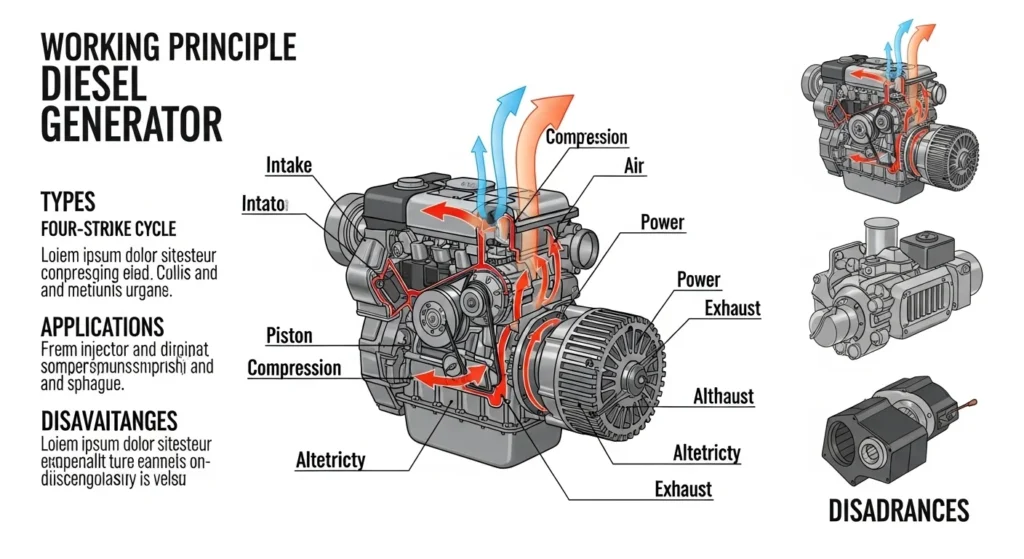
The Diesel Generator working principle is based on energy conversion from fuel to mechanical motion and finally to electrical energy.
Step-by-Step Working Process
- Fuel Injection
- Diesel fuel is injected into the engine cylinders.
- Fuel Combustion
- The fuel mixes with compressed air and ignites inside the cylinder.
- Mechanical Energy Production
- The combustion process pushes the piston and rotates the crankshaft.
- Alternator Rotation
- The crankshaft is connected to an alternator shaft.
- Electricity Generation
- The rotating alternator produces electricity through electromagnetic induction.
- Power Distribution
- The electrical output is delivered to connected equipment and systems.
Simple Analogy
A diesel generator works like a mini power plant where fuel provides energy, the engine creates motion, and the generator produces electricity.
Types of Diesel Generator
Diesel generators are available in different types based on size, design, and application.
Portable Diesel Generator
Portable diesel generators are small and movable power units.
Features:
- Easy to transport
- Used for temporary power supply
- Suitable for small businesses and outdoor work
Standby Diesel Generator
Standby generators automatically start when the main power supply fails.
Features:
- Automatic operation
- Connected to building electrical systems
- Used in hospitals, offices, and homes
Industrial Diesel Generator
Industrial generators are designed for heavy power loads.
Features:
- High power capacity
- Continuous operation capability
- Used in factories and large facilities
Silent Diesel Generator
Silent generators are designed with soundproof enclosures.
Features:
- Low noise operation
- Suitable for residential and commercial areas
- Used in events and urban environments
Main Components of a Diesel Generator
A diesel generator consists of several key components that work together.
Diesel Engine
The diesel engine is the main power source.
Function:
- Burns diesel fuel to produce mechanical energy.
Alternator
The alternator converts mechanical energy into electrical energy.
Function:
- Produces AC electricity.
Fuel System
The fuel system stores and supplies diesel fuel to the engine.
Function:
- Ensures continuous fuel delivery.
Cooling System
The cooling system prevents overheating during operation.
Function:
- Maintains safe engine temperature.
Control Panel
The control panel monitors generator operation.
Function:
- Displays voltage, current, and system status.
Voltage Regulator
The voltage regulator controls the output voltage.
Function:
- Maintains stable electrical output.
Diesel Generator Advantages
Understanding Diesel Generator advantages and disadvantages helps technicians and engineers design reliable power systems.
Advantages
- Highly reliable power source
- Suitable for heavy electrical loads
- Long operational lifespan
- High efficiency compared to gasoline generators
- Easily available fuel
- Ideal for continuous power generation
Real-World Benefits
Diesel generators help prevent downtime in industries and provide essential backup power during emergencies.
Diesel Generator Disadvantages / Limitations
Despite their advantages, diesel generators also have some limitations.
Limitations
- Higher noise levels during operation
- Diesel fuel emissions can affect the environment
- Requires regular maintenance
- Fuel storage is necessary
However, proper maintenance and modern technology help reduce these issues.
Diesel Generator Applications
There are many important Diesel Generator applications in modern power systems.
Residential Backup Power
Homes use diesel generators to provide electricity during power outages.
Hospitals
Hospitals rely on diesel generators for life-support equipment and emergency lighting.
Construction Sites
Heavy construction tools and machines operate using diesel generators.
Industrial Facilities
Factories use large diesel generators to power production equipment.
Data Centers
Data centers use backup generators to protect servers and prevent data loss.
Comparison: Diesel Generator vs Natural Gas Generator
Understanding the difference between diesel generator and natural gas generator helps users select the right generator.
| Feature | Diesel Generator | Natural Gas Generator |
|---|---|---|
| Fuel Type | Diesel | Natural Gas |
| Power Output | High | Moderate |
| Emissions | Higher | Lower |
| Fuel Storage | Required | Not required |
| Maintenance | Moderate | Moderate |
Key Difference
The main difference between diesel generator and natural gas generator is that diesel generators provide higher power output while natural gas generators produce cleaner emissions.
Selection Guide
Choosing the right diesel generator requires proper planning.
Power Requirement
Calculate the total electrical load that needs power backup.
Fuel Efficiency
Choose generators with good fuel consumption performance.
Noise Level
Consider silent generators if noise is a concern.
Installation Area
Ensure proper ventilation and safe installation.
Maintenance Support
Choose manufacturers with reliable service networks.
Tips for Beginners
- Select generators with slightly higher capacity than the expected load.
- Always install safety protection systems.
- Follow electrical safety standards.
Common Problems & Solutions
Why does the diesel generator fail to start?
Possible causes:
- Empty fuel tank
- Weak battery
- Faulty starter motor
Solution: Check fuel level and battery condition.
Why is the generator overheating?
Possible causes:
- Cooling system malfunction
- Blocked air circulation
Solution: Inspect cooling system and ventilation.
Why does the voltage fluctuate?
Possible causes:
- Faulty voltage regulator
- Overloaded generator
Solution: Check regulator and reduce electrical load.
Why is the generator producing excessive smoke?
Possible causes:
- Poor fuel quality
- Engine maintenance issues
Solution: Use high-quality diesel fuel and perform regular maintenance.
Future Trends in Diesel Generator Technology
Diesel generator technology continues to evolve.
Smart Monitoring Systems
Modern generators include digital monitoring and remote control systems.
Hybrid Power Systems
Diesel generators are being combined with solar and battery systems.
Low-Emission Engines
Manufacturers are developing eco-friendly diesel engines with lower emissions.
Improved Fuel Efficiency
Future generators will consume less fuel while producing higher power.
Conclusion
A Diesel Generator is one of the most reliable power generation systems used in homes, industries, hospitals, and commercial facilities. These generators provide electricity during power outages and ensure continuous operation of essential equipment.
Understanding the Diesel Generator working principle helps electrical students, technicians, and engineers design efficient backup power systems. Diesel generators are popular because of their high power capacity, durability, and reliability.
Although diesel generators require proper maintenance and fuel management, their ability to deliver dependable electricity makes them extremely valuable. As technology continues to improve, future diesel generators will become more efficient, environmentally friendly, and integrated with modern energy systems.