
Imagine building a new house and planning the electrical system that will power lights, fans, air conditioners, and other appliances. Many homeowners focus on switches, lights, and decoration but often overlook the wiring system hidden inside the walls. However, the wiring method used in a house plays a critical role in safety, durability, and future maintenance.
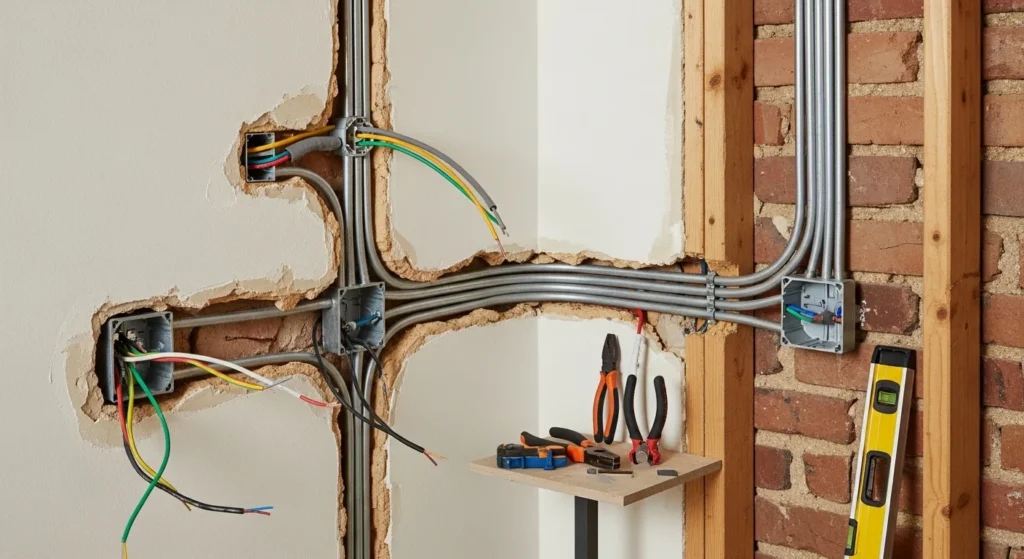
One of the most widely used and reliable wiring methods is the conduit wiring system in homes. In this system, electrical wires are installed inside protective pipes called conduits. These conduits protect the wires from physical damage, moisture, and environmental factors.
For electricians, engineers, and homeowners, understanding this wiring system is essential. A properly installed conduit system increases electrical safety, makes maintenance easier, and improves the lifespan of wiring.
In this article, you will learn what the conduit wiring system in homes is, its working principle, types, components, advantages and disadvantages, applications, and how to choose the right system for residential installations. The goal is to help beginners and electrical students understand this important wiring method clearly and practically.
2. What is Conduit Wiring System in Homes?
The conduit wiring system in homes is an electrical wiring method in which insulated wires are placed inside protective tubes called conduits.
These conduits can be made of different materials such as:
- PVC (plastic)
- Steel
- Aluminum
The main purpose of conduits is to protect electrical wires from mechanical damage, moisture, dust, and heat.
Simple Explanation
Instead of leaving wires exposed or placing them directly in walls, electricians run the wires through protective pipes. These pipes are then installed inside walls, ceilings, or on surfaces.
Practical Example
In modern houses, the wires that connect switches, lights, and sockets are often hidden inside walls. These wires run through PVC conduits, which protect them and allow safe electrical distribution throughout the home.
Understanding the conduit wiring system in homes working principle helps electricians install safe and long-lasting electrical systems.
3. Working Principle
The conduit wiring system in homes working principle is simple but very effective.
The basic idea is to run insulated wires inside protective pipes that guide electricity safely from the distribution board to electrical devices.
Step-by-Step Working Process
- Electrical power enters the home through the main distribution board.
- Wires carry electricity from the distribution board to different rooms.
- These wires pass through conduit pipes installed inside walls or ceilings.
- The conduits protect the wires from damage or moisture.
- The wires connect to switches, sockets, lights, and appliances.
Simple Analogy
Think of the conduit like a protective tunnel for electrical wires.
Just as underground pipelines protect water pipes, conduits protect electrical cables while allowing electricity to travel safely throughout the house.
4. Types / Classification
The conduit wiring system in homes can be classified into several types based on installation method and material.
Surface Conduit Wiring
In surface conduit wiring, conduits are installed on the surface of walls or ceilings.
Features:
- Easy to install
- Visible on wall surface
- Easy maintenance
This method is commonly used in garages, workshops, and older buildings.
Concealed Conduit Wiring
This is the most popular wiring method in modern homes.
In this system, conduits are hidden inside walls, floors, or ceilings.
Features:
- Clean appearance
- High protection
- Long-lasting installation
Most modern residential buildings use concealed conduit wiring.
Metal Conduit Wiring
Metal conduits are made from steel or aluminum.
Advantages:
- High mechanical strength
- Excellent protection
- Fire-resistant
They are commonly used in industrial or high-risk environments.
PVC Conduit Wiring
PVC conduits are made from plastic material.
Advantages:
- Lightweight
- Corrosion-resistant
- Easy to install
This type is widely used in residential wiring because it is affordable and safe.
5. Main Components
The conduit wiring system in homes includes several important components.
1. Conduit Pipes
These are protective pipes used to cover electrical wires.
They guide and protect wires throughout the house.
2. Electrical Wires
Insulated copper or aluminum wires carry electricity from the power source to appliances.
3. Junction Boxes
Junction boxes connect different wires together.
They also protect wire connections.
4. Switch Boxes
Switch boxes hold electrical switches and sockets.
They connect the wiring system to household devices.
5. Bends and Couplings
These fittings help change the direction of conduits and join multiple pipes.
6. Advantages
The conduit wiring system in homes advantages and disadvantages must be understood before installation.
Advantages
- Provides excellent protection for electrical wires
- Reduces risk of electric shock
- Protects wires from moisture and dust
- Longer lifespan compared to open wiring
- Easier to replace or upgrade wiring later
- Improved safety in modern homes
In real-world applications, conduit wiring significantly reduces electrical hazards.
7. Disadvantages / Limitations
Although it has many benefits, the conduit wiring system in homes also has some limitations.
Disadvantages
- Higher installation cost
- Requires skilled electricians
- Installation takes more time
- Fault detection can be difficult in concealed systems
Despite these limitations, the safety and durability often make conduit wiring the preferred choice.
8. Applications
The conduit wiring system in homes applications extend beyond residential buildings.
Home Applications
- Lighting circuits
- Power sockets
- Kitchen appliances
- Air conditioners
- Water heaters
Commercial Buildings
- Offices
- Shopping malls
- Hospitals
- Schools
Industrial Applications
- Factories
- Workshops
- Power plants
In modern electrical installations, conduit wiring is considered a standard practice.
9. Comparison Section
Many beginners ask about the difference between conduit wiring and casing and capping wiring.
| Feature | Conduit Wiring | Casing and Capping Wiring |
|---|---|---|
| Protection Level | High protection | Moderate protection |
| Appearance | Hidden in walls | Visible on walls |
| Cost | Higher | Lower |
| Safety | Very safe | Less safe |
| Maintenance | More complex | Easier |
In modern homes, conduit wiring is usually preferred because of its safety and durability.
10. Selection Guide
Choosing the right conduit wiring system in homes depends on several factors.
Important Factors
- Type of building
- Budget
- Safety requirements
- Future electrical load
Tips for Beginners
- Use PVC conduits for residential installations
- Plan wiring layout before wall construction
- Install proper junction boxes
- Ensure professional installation
Proper planning prevents future electrical problems.
11. Common Problems & Solutions
Q1: Why do wires overheat in conduit wiring?
Overheating may occur due to overloading or using undersized wires.
Solution: Use correct wire size and avoid connecting too many appliances to one circuit.
Q2: Why is it difficult to pull wires through conduits?
This may happen if conduits have too many bends.
Solution: Use proper conduit layout and install pull boxes where needed.
Q3: What happens if moisture enters conduits?
Moisture can damage insulation and cause electrical faults.
Solution: Use sealed conduits and proper fittings.
Q4: Why do electrical faults occur in concealed conduit wiring?
Faults usually occur due to poor installation or damaged insulation.
Solution: Use quality materials and professional installation practices.
12. Future Trends
The future of the conduit wiring system in homes is evolving with modern technology.
Smart Electrical Systems
Modern homes are adopting smart wiring systems that support automation and smart devices.
Improved Conduit Materials
New materials are being developed that offer:
- Better heat resistance
- Higher durability
- Improved flexibility
Green Building Standards
Energy-efficient electrical systems and safe wiring practices are becoming more important in modern construction.
These trends will continue to improve electrical safety and reliability.
13. Conclusion
The conduit wiring system in homes is one of the safest and most reliable electrical wiring methods used in modern residential construction. By placing electrical wires inside protective pipes, this system provides excellent protection against physical damage, moisture, and environmental hazards.
Understanding the conduit wiring system in homes working principle, types, components, and applications helps electricians and students design safer electrical installations. Although the installation cost may be higher than some traditional wiring methods, the long-term safety and durability make it a worthwhile investment.
For homeowners, builders, and electrical technicians, selecting the correct wiring system is essential for ensuring safe power distribution throughout the house. With proper planning, quality materials, and professional installation, conduit wiring can provide reliable electrical performance for many years.
Continuous advancements in electrical technology will further improve the efficiency and safety of conduit wiring systems in future homes.