
Imagine a ceiling fan running for many hours in your home. Even though the fan rotates continuously, it operates smoothly without producing too much noise or heat. The small component that allows this smooth rotation is called a bearing.
Bearings are extremely important in electrical and mechanical machines. They support rotating shafts and reduce friction between moving parts. Without bearings, machines like electric motors, generators, pumps, and fans would quickly wear out due to high friction.
For electrical students, engineers, technicians, and beginners, understanding bearings is very important because almost every rotating electrical machine uses them. Bearings help machines operate efficiently, reduce energy loss, and increase equipment lifespan.
In this article, you will learn what bearings are, the bearings working principle, and different types of bearings used in machines. We will also discuss bearings applications, their advantages and disadvantages, important components, and how to choose the right bearing. By the end of this guide, you will have a clear understanding of how bearings work and why they are essential in modern electrical and industrial systems.
What is a Bearing?
A bearing is a mechanical component that supports rotating parts and reduces friction between moving surfaces. It allows a shaft or machine part to rotate smoothly with minimal resistance.
In simple terms, bearings act as a support system for rotating components. Instead of two surfaces rubbing directly against each other, bearings place rolling elements between them. This reduces friction and allows smooth movement.
Practical Example
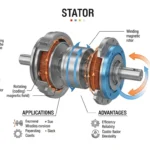
Inside an electric motor, the rotor rotates at high speed. Bearings hold the rotor shaft in position and allow it to spin smoothly inside the motor housing. Without bearings, the shaft would rub directly against the metal casing, causing damage and overheating.
Bearings Working Principle
The bearings working principle is based on reducing friction between moving parts by converting sliding friction into rolling friction.
Rolling friction requires much less force than sliding friction, which allows machines to operate more efficiently.
Step-by-Step Operation
- The bearing supports the rotating shaft of a machine.
- Rolling elements such as balls or rollers are placed between two rings.
- When the shaft rotates, the rolling elements move between the rings.
- This rolling motion reduces friction between surfaces.
- As a result, the shaft rotates smoothly and efficiently.
Simple Analogy
Imagine pushing a heavy box across the floor. It is difficult because of friction. But if you place small rollers under the box, it becomes much easier to move. Bearings work in the same way by using rolling elements to reduce friction.
Types / Classification of Bearings
Bearings are available in different types depending on the load, speed, and application.
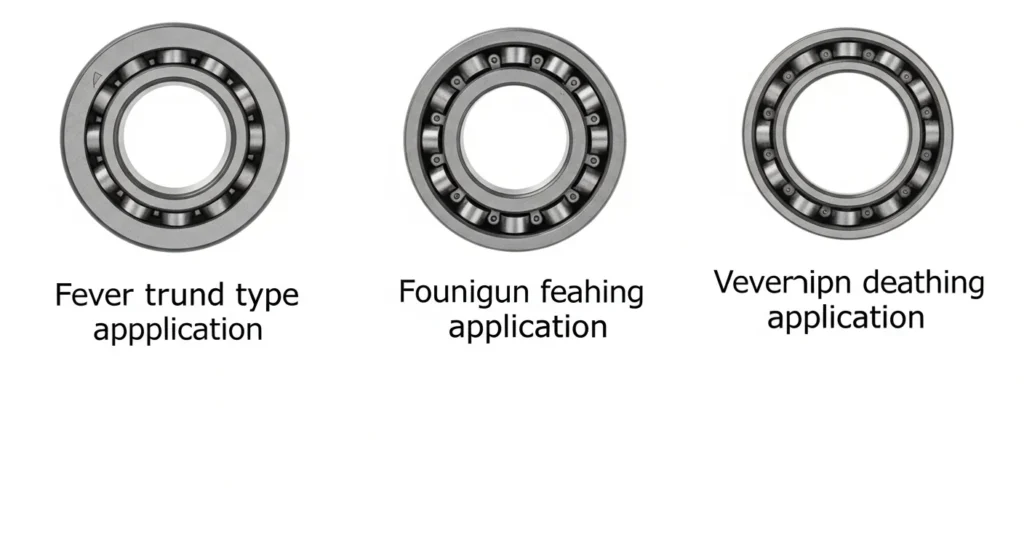
Ball Bearings
Ball bearings use small steel balls between two rings to reduce friction.
Features:
- Suitable for high-speed applications
- Low friction
- Widely used in electric motors and fans
Ball bearings are commonly found in household appliances and small machines.
Roller Bearings
Roller bearings use cylindrical rollers instead of balls.
Features:
- Higher load capacity
- Suitable for heavy machinery
- Strong and durable
They are commonly used in industrial machines and large motors.
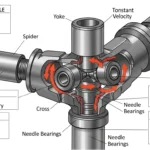
Needle Bearings
Needle bearings use long and thin rollers.
Features:
- Compact design
- High load capacity for small spaces
These bearings are often used in automotive systems and precision equipment.
Thrust Bearings
Thrust bearings are designed to support axial loads.
Features:
- Supports force along the shaft direction
- Used in rotating equipment
Applications include turbines, gear systems, and machine tools.
Plain Bearings
Plain bearings do not use rolling elements. Instead, they rely on sliding motion between surfaces.
Features:
- Simple design
- Low cost
- Suitable for low-speed machines
Main Components of a Bearing
A typical bearing consists of several important parts that work together to reduce friction and support rotation.
Inner Ring
The inner ring is mounted on the rotating shaft.
Function:
- Rotates together with the shaft
- Supports the rolling elements
Outer Ring
The outer ring is fixed inside the machine housing.
Function:
- Holds the bearing in place
- Supports the rolling elements
Rolling Elements
Rolling elements can be balls or rollers.
Function:
- Reduce friction
- Allow smooth rotation
Cage (Retainer)
The cage keeps the rolling elements evenly spaced.
Function:
- Prevents collision between rolling elements
- Maintains proper alignment
Lubrication
Lubrication is essential for proper bearing operation.
Function:
- Reduces friction
- Prevents overheating
- Protects against wear
Bearings Advantages
Bearings provide many benefits in machines and electrical equipment.
Bearings advantages include:
- Reduces friction between moving parts
- Improves machine efficiency
- Supports heavy loads
- Enables smooth and stable rotation
- Increases equipment lifespan
- Reduces energy consumption
These benefits make bearings essential in almost every rotating machine.
Disadvantages / Limitations
Although bearings are very useful, they also have some limitations.
Bearings advantages and disadvantages should both be considered during machine design.
Bearings Disadvantages
- Requires proper lubrication
- May wear out after long use
- Sensitive to dust and contamination
- Improper installation can cause failure
- High-quality bearings can be expensive
Regular maintenance is required to ensure long-term performance.
Bearings Applications
Bearings are used in many machines and technologies.
Home Applications
Bearings are commonly used in:
- Ceiling fans
- Washing machines
- Air conditioners
- Power tools
They help household appliances operate smoothly and quietly.
Industrial Applications
In industrial environments, bearings are used in:
- Electric motors
- Pumps and compressors
- Conveyor systems
- Industrial machinery
They support heavy loads and continuous operation.
Modern Technology Applications
Advanced technologies also rely on bearings.
Examples include:
- Wind turbines
- Electric vehicles
- Robotics systems
- Aerospace equipment
These bearings applications show how important they are in modern engineering systems.
Comparison Section
Difference Between Ball Bearing and Roller Bearing
| Feature | Ball Bearing | Roller Bearing |
|---|---|---|
| Rolling Element | Balls | Cylindrical rollers |
| Load Capacity | Moderate | High |
| Speed | High-speed applications | Moderate speed |
| Applications | Motors, fans | Heavy machinery |
Understanding the difference between ball bearing and roller bearing helps engineers select the correct type for different machines.
Selection Guide
Choosing the correct bearing is important for machine reliability.
Factors to Consider
- Load capacity
- Rotational speed
- Operating temperature
- Environmental conditions
- Maintenance requirements
Tips for Beginners
- Always select bearings based on machine load.
- Use proper lubrication to increase lifespan.
- Choose high-quality bearings for critical machines.
- Follow manufacturer recommendations.
Correct selection improves efficiency and reduces maintenance costs.
Common Problems & Solutions
Why do bearings produce noise?
Noise may occur due to lack of lubrication or worn parts.
Solution:
- Apply proper lubrication
- Replace damaged bearings
Why do bearings overheat?
Overheating can occur due to excessive load or poor lubrication.
Solution:
- Check lubrication system
- Reduce mechanical load if necessary
Why do bearings fail early?
Early failure may occur due to contamination or incorrect installation.
Solution:
- Install bearings correctly
- Maintain a clean operating environment
Why does vibration occur in bearings?
Vibration may occur due to shaft misalignment or imbalance.
Solution:
- Check shaft alignment
- Inspect machine mounting
Future Trends
Bearing technology continues to improve with modern engineering advancements.
Smart Bearings
Sensors are now integrated into bearings to monitor temperature, vibration, and load.
Advanced Materials
New materials increase durability and reduce friction.
Self-Lubricating Bearings
Modern bearings reduce the need for frequent lubrication.
Energy-Efficient Bearings
Improved designs reduce energy loss and increase machine efficiency.
These innovations will improve the performance of electrical machines and industrial equipment.
Conclusion
Bearings are small components, but they play a very important role in the operation of machines. By reducing friction and supporting rotating shafts, bearings allow machines to run smoothly and efficiently.
In this article, we explained what bearings are, the bearings working principle, and the different types used in modern machines. We also discussed bearings advantages and disadvantages, major components, and the most common bearings applications in homes, industries, and advanced technologies.
For electrical students, engineers, and technicians, understanding bearings is essential because almost every rotating machine depends on them. Proper bearing selection, installation, and maintenance can significantly improve machine performance and lifespan.
As technology continues to evolve, modern bearing designs and smart monitoring systems will further improve efficiency, reliability, and machine performance in the future.