
Imagine entering a house in the evening and switching on the lights. Instantly, the room becomes bright without flickering, and the light feels comfortable for the eyes. The electricity bill is also lower compared to older lighting systems. In most modern homes and buildings, this efficient lighting solution comes from LED bulbs.
In the past, incandescent bulbs and compact fluorescent lamps were commonly used for lighting. These older technologies consumed more electricity and had shorter lifespans. Incandescent bulbs also produced a lot of heat, wasting a large portion of electrical energy. As energy efficiency became more important around the world, engineers developed a better lighting technology known as LED lighting.
Today, LED bulbs are widely used in homes, offices, industries, and public spaces because they provide bright light while consuming very little electricity. They also last much longer than traditional bulbs, which reduces maintenance and replacement costs.
For electrical students, technicians, and engineers, understanding modern lighting systems is essential. Learning about the LED bulbs working principle, components, and applications helps professionals design efficient and reliable electrical installations.
In this article, you will learn what LED bulbs are, how they work, their types, LED bulbs applications, advantages, disadvantages, and practical tips for selecting the right LED bulb.
What is LED Bulbs?
LED bulbs are modern lighting devices that use Light Emitting Diodes (LEDs) to produce illumination. They are designed to replace traditional incandescent and fluorescent light bulbs used in residential and commercial lighting.
In simple terms, an LED bulb contains multiple small LED chips that produce light when electricity passes through them. These chips are arranged inside a bulb-shaped structure that distributes light evenly across a room.
Unlike traditional bulbs that produce light by heating a filament, LED bulbs use semiconductor technology to convert electrical energy directly into light. This makes them much more energy-efficient and durable.
Practical Example
Consider a living room where a 60-watt incandescent bulb was previously used. After replacing it with a 9-watt LED bulb, the room remains equally bright, but the electricity consumption drops significantly. In addition, the LED bulb can last many years without replacement.
Because of these benefits, LED bulbs have become the most popular lighting option in modern electrical systems.
LED Bulbs Working Principle
Understanding the LED bulbs working principle helps electrical learners understand how LED lighting produces light efficiently.
LED bulbs operate using semiconductor materials that emit light when an electric current passes through them.
Step-by-Step Working Process
• AC Power Supply
The LED bulb receives electrical power from the AC mains supply in homes or buildings.
• Driver Circuit Conversion
Inside the bulb, a driver circuit converts AC voltage into regulated DC voltage suitable for LED chips.
• Current Regulation
The driver controls the electrical current to protect the LEDs and ensure stable operation.
• Light Generation
When current flows through the LED chips, electrons release energy in the form of photons, producing visible light.
• Light Distribution
The diffuser or plastic dome spreads the light evenly throughout the room.
Easy Analogy
Think of an LED bulb as a group of tiny electronic light sources working together inside one bulb. When electricity flows through them, they produce bright and efficient illumination.
Key Characteristics
• Instant lighting without delay
• Very low heat production
• No fragile filament
• High electrical efficiency
These features explain why LED bulbs are replacing traditional lighting technologies worldwide.
Types / Classification
LED bulbs are available in different types based on shape, base type, and lighting application.
Standard LED Bulbs
These are the most common LED bulbs used in homes and offices.
Features:
• Standard screw base
• General room lighting
• Available in different wattages
They are suitable for lamps, ceiling fixtures, and wall lights.
Globe LED Bulbs
Globe bulbs have a round design and provide wide light distribution.
Features:
• Decorative appearance
• Even light output
• Often used in bathrooms and dressing areas
Candle LED Bulbs
Candle-shaped LED bulbs are designed for decorative lighting fixtures such as chandeliers.
Features:
• Elegant appearance
• Soft lighting
• Used in decorative lamps
Smart LED Bulbs
Smart LED bulbs can be controlled using smartphones or voice assistants.
Features:
• Remote control operation
• Adjustable brightness
• Color changing capability
They are becoming popular in smart homes.
Dimmable LED Bulbs
These bulbs allow users to adjust brightness using a compatible dimmer switch.
Features:
• Flexible lighting control
• Energy savings
• Suitable for living rooms and bedrooms
Main Components
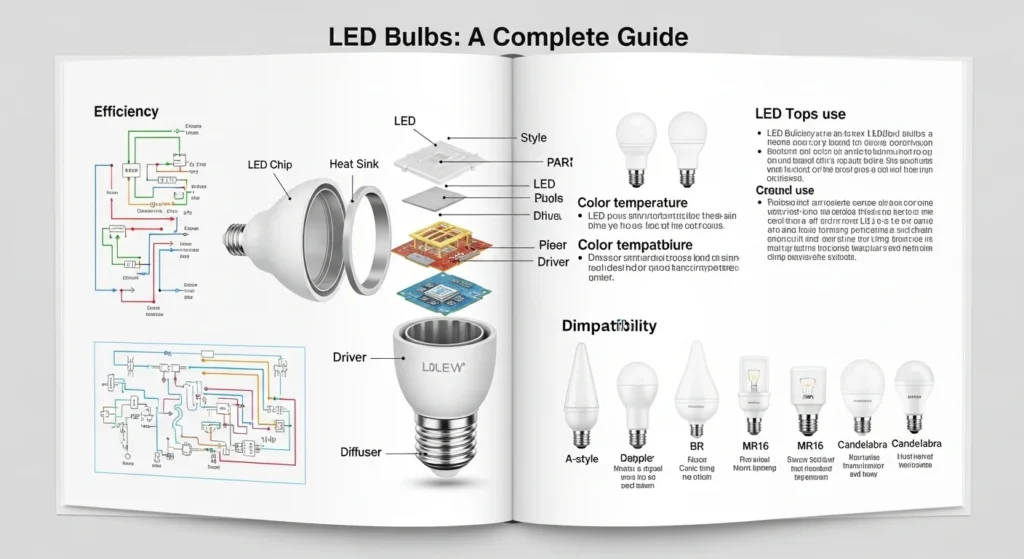
An LED bulb contains several important components that work together to produce efficient lighting.
LED Chips
LED chips are the main light-producing elements inside the bulb. They convert electrical energy into visible light.
Driver Circuit
The driver circuit converts AC voltage into controlled DC current required for LED operation.
It also protects the LEDs from voltage fluctuations.
Heat Sink
The heat sink is usually made of aluminum and helps remove heat from the LED chips, improving their lifespan.
Diffuser Dome
The diffuser spreads the light evenly and reduces glare.
It also protects the internal components of the bulb.
Base Connector
The base connects the bulb to the lamp holder and provides electrical contact.
Common base types include screw bases and bayonet bases.
Advantages
Understanding LED bulbs advantages and disadvantages helps electrical technicians choose the right lighting solutions.
Advantages of LED Bulbs
• Very low power consumption
• Long lifespan (often 25,000–50,000 hours)
• Instant start with no flicker
• Environmentally friendly (no mercury)
• Low maintenance cost
• High brightness efficiency
• Strong and durable structure
• Available in different colors and brightness levels
These advantages make LED bulbs one of the most energy-efficient lighting technologies available today.
Disadvantages / Limitations
Although LED bulbs provide many benefits, they also have some practical limitations.
Disadvantages
• Higher initial purchase cost
• Low-quality bulbs may fail early
• Heat management is important for long lifespan
• Some models require compatible dimmer switches
Understanding these LED bulbs advantages and disadvantages helps users select high-quality lighting products.
LED Bulbs Applications
Because of their efficiency and reliability, LED bulbs applications are widely found in modern lighting systems.
Home Applications
• Living room lighting
• Bedroom lamps
• Kitchen lighting
• Outdoor garden lights
Commercial Applications
• Office buildings
• Retail stores
• Restaurants
• Hotels
Industrial Applications
• Factory lighting
• Warehouse lighting
• Workshop areas
• Maintenance rooms
Public and Modern Technology Applications
• Street lighting
• Hospitals
• Educational institutions
• Smart home systems
These wide LED bulbs applications show how LED lighting has become essential in modern infrastructure.
Comparison Section
Difference Between LED Bulbs and Incandescent Bulbs
| Feature | LED Bulbs | Incandescent Bulbs |
|---|---|---|
| Energy Consumption | Very low | Very high |
| Lifespan | 25,000–50,000 hours | 1,000 hours |
| Heat Generation | Low | Very high |
| Efficiency | High | Low |
| Environmental Impact | Eco-friendly | Less efficient |
This comparison helps electrical learners understand the difference between LED bulbs and incandescent bulbs.
Selection Guide
Choosing the correct LED bulb is important for proper lighting performance.
Tips for Beginners
Check the Wattage
Common LED bulb wattages include:
• 5W
• 9W
• 12W
• 15W
Higher wattage produces more brightness.
Check Lumen Output
Lumens measure brightness. Higher lumen values provide stronger lighting.
Select Color Temperature
Typical color temperatures include:
• 2700K – Warm white
• 4000K – Neutral white
• 6500K – Cool white
Choose Quality Brands
High-quality LED bulbs provide better performance and longer lifespan.
Common Problems & Solutions
Why is my LED bulb not turning on?
Possible causes:
• No power supply
• Loose lamp holder connection
• Faulty driver circuit
Solution: Check the power source and replace the bulb if necessary.
Why is the LED bulb flickering?
Possible reasons:
• Voltage fluctuation
• Incompatible dimmer switch
• Driver circuit failure
Solution: Replace the dimmer or install a stable power supply.
Why is the LED bulb dim?
Possible causes:
• Aging LED chips
• Poor electrical connection
• Low-quality driver
Solution: Replace with a reliable LED bulb.
Future Trends
LED lighting technology continues to improve rapidly.
Smart Lighting Integration
Future LED bulbs will integrate more deeply with smart home systems and voice control technologies.
Higher Efficiency LEDs
Advanced LED chips will produce more brightness while consuming less electricity.
Human-Centric Lighting
Future lighting systems may adjust brightness and color temperature based on human biological rhythms.
Sustainable Lighting Design
Manufacturers are developing LED bulbs that use recyclable materials and improved energy efficiency.
These developments will continue to shape the future of lighting technology.
Conclusion
LED bulbs have transformed modern lighting by providing a highly efficient, reliable, and environmentally friendly alternative to traditional bulbs. Their long lifespan, low power consumption, and bright illumination make them ideal for homes, commercial buildings, and industrial environments.
Understanding the LED bulbs working principle, components, and installation considerations is essential for electrical students and technicians. These bulbs offer many benefits, including reduced energy consumption, lower maintenance costs, and improved lighting quality.
Although there are some limitations, the LED bulbs advantages and disadvantages clearly show that LED technology is the future of lighting systems. As new innovations continue to emerge, LED bulbs will remain a key part of energy-efficient electrical installations around the world.