
Imagine entering a dark room and turning on the light with a simple switch on the wall. This everyday action seems very basic, but behind it lies one of the most important components in electrical systems—the Single Pole Switch.
In homes, offices, workshops, and industrial facilities, electrical devices must be controlled safely and efficiently. Without switches, electrical circuits would remain permanently connected, which would be dangerous and impractical. The single pole switch is the most commonly used switch in electrical wiring because it provides a simple and reliable way to control power to a device.
For electrical students, technicians, and engineers, understanding how this switch works is essential. It forms the foundation for learning more advanced switching systems and circuit control methods.
In this article, we will explore the Single Pole Switch working principle, its types, components, advantages and disadvantages, and real-world single pole switch applications. You will also learn how to select the right switch, troubleshoot common issues, and understand the difference between single pole switch and double pole switch.
By the end, you will have a clear and practical understanding of this important electrical component.
2. What is a Single Pole Switch?
A Single Pole Switch is a basic electrical switch that controls one circuit by interrupting or allowing the flow of current through a single conductor.
In simple words, it turns a device ON or OFF by opening or closing the electrical circuit.
The term “single pole” means that the switch controls only one live wire (phase wire) in the circuit. When the switch is turned off, it breaks the connection of that wire and stops the flow of electricity.
Simple Explanation
Think of electricity like water flowing through a pipe. The switch acts like a valve:
- Switch ON → The path is open → Electricity flows
- Switch OFF → The path is broken → Electricity stops
Practical Example
A common example is the wall switch used to control a room light. When you flip the switch:
- The light turns ON because the circuit is completed.
- The light turns OFF because the circuit is broken.
Because of its simplicity, the single pole switch is widely used in residential electrical installations.
3. Single Pole Switch Working Principle
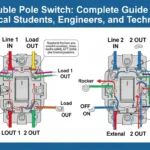
The single pole switch working principle is based on opening and closing an electrical circuit.
Inside the switch, metal contacts either connect or disconnect the electrical path.
Step-by-Step Working
- Power Supply Connection
The live wire from the power source is connected to the switch input terminal. - Internal Contact Mechanism
Inside the switch, there is a movable metal contact. - Switch ON Position
- The metal contact touches another terminal.
- The circuit becomes complete.
- Current flows to the electrical load.
- Switch OFF Position
- The metal contact separates.
- The circuit is broken.
- Current stops flowing.
Simple Analogy
Think of a door:
- When the door is open, people can pass through.
- When the door is closed, movement stops.
Similarly, the switch controls whether electricity can pass through the circuit.
4. Types / Classification of Single Pole Switch
Single pole switches come in different designs depending on their use and installation method.
Toggle Single Pole Switch
This is the most common type used in homes.
Features:
- Lever-style operation
- Easy to install
- Reliable for lighting circuits
It is widely used in residential wall switchboards.
Rocker Single Pole Switch
This switch uses a rocking mechanism instead of a lever.
Features:
- Modern design
- Smooth operation
- Common in modern buildings
Rocker switches are popular in contemporary electrical panels.
Push Button Single Pole Switch
This type works by pressing a button.
Features:
- Spring-loaded mechanism
- Often used in doorbells
- Suitable for temporary contact
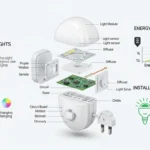
Smart Single Pole Switch
Modern homes now use smart switches connected to home automation systems.
Features:
- Remote control via smartphone
- Voice assistant compatibility
- Energy monitoring
These switches are becoming more common in smart homes.
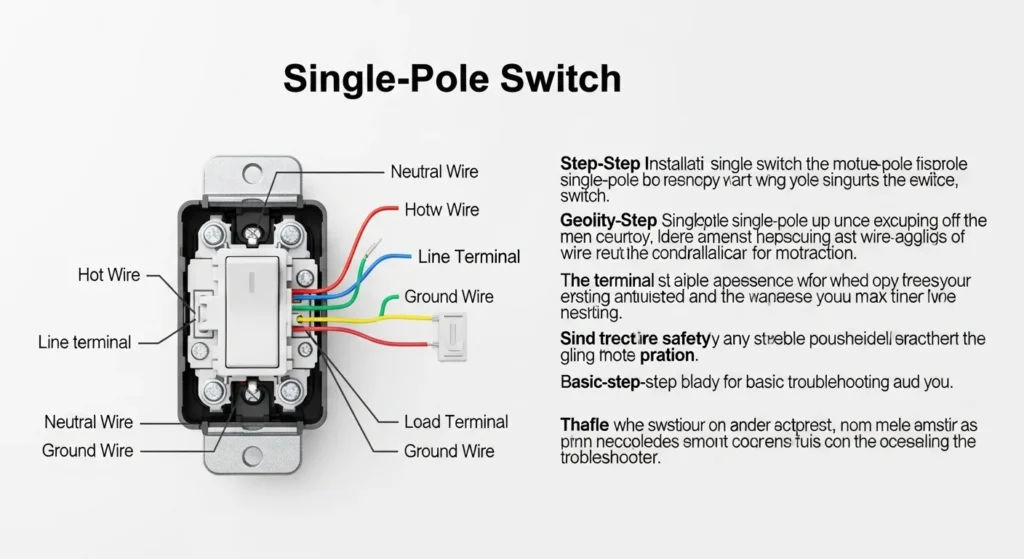
5. Main Components
A single pole switch contains several simple but important parts.
1. Switch Housing
The outer casing protects internal components and provides insulation.
Usually made from plastic or insulating materials.
2. Terminals
Terminals are connection points where wires are attached.
A typical single pole switch has:
- Input terminal
- Output terminal
3. Moving Contact
This metal part moves when the switch is operated.
Its job is to connect or disconnect the electrical circuit.
4. Fixed Contact
The stationary metal contact connects with the moving contact when the switch is turned on.
5. Actuator (Lever or Rocker)
This is the part the user touches to operate the switch.
It moves the internal contact mechanism.
6. Advantages
The single pole switch advantages and disadvantages should be understood before using it.
Advantages
- Simple design and easy to understand
- Low cost compared to complex switches
- Easy installation in residential wiring
- Reliable operation with minimal maintenance
- Suitable for controlling lights and small appliances
- Compact and widely available
Because of these benefits, it is the most commonly used switch in electrical installations.
7. Disadvantages / Limitations
Although very useful, single pole switches also have limitations.
- Controls only one circuit
- Cannot control multiple loads simultaneously
- Not suitable for high-power industrial circuits
- Provides limited control compared to multi-pole switches
- Cannot isolate both live and neutral wires
These limitations are why other switches like double pole switches are used in some applications.
8. Applications
The single pole switch applications are very common in everyday electrical systems.
Home Applications
- Room lighting control
- Ceiling fan switching
- Table lamps
- Bathroom lights
- Kitchen lighting
Commercial Applications
- Office lighting control
- Meeting room lights
- Retail shop displays
- Small electrical appliances
Industrial Applications
- Control panels for small equipment
- Machine indicator lights
- Electrical training boards
Modern Technology Uses
- Smart home lighting systems
- IoT-based automation devices
- Energy-saving lighting control
Because of its simplicity, it remains one of the most widely used switching devices.
9. Comparison Section
Understanding the difference between single pole switch and double pole switch helps engineers choose the correct switch.
| Feature | Single Pole Switch | Double Pole Switch |
|---|---|---|
| Number of Circuits | Controls one circuit | Controls two circuits |
| Wire Control | Breaks one wire | Breaks two wires |
| Usage | Lights and small loads | Heavy appliances |
| Safety Level | Basic isolation | Better isolation |
| Installation | Simple | Slightly complex |
In simple terms, a single pole switch is ideal for small devices, while a double pole switch is better for higher power loads.
10. Selection Guide
Choosing the right switch is important for safety and performance.
Check Voltage Rating
Ensure the switch voltage rating matches the circuit voltage.
For example:
- 220V for residential circuits.
Check Current Rating
Switches are designed for specific current limits.
Common ratings include:
- 5A
- 10A
- 15A
Choose a switch that can safely handle the load.
Quality of Materials
Use switches made with high-quality insulating materials.
Cheap switches may overheat or fail early.
Safety Certifications
Look for certified electrical products from reputable manufacturers.
This ensures reliability and safety.
11. Common Problems & Solutions
Electrical technicians often encounter issues with switches. Here are common problems and solutions.
Switch Not Turning On Light
Possible causes:
- Loose wire connection
- Faulty switch contacts
- Burned-out bulb
Solution:
- Check wiring connections and replace the switch if necessary.
Spark When Switching
Possible causes:
- Worn contacts
- High electrical load
Solution:
- Replace the switch with a higher rated one.
Switch Feels Loose
Possible causes:
- Internal spring failure
- Mechanical wear
Solution:
- Replace the switch immediately.
Light Flickering
Possible causes:
- Loose wiring
- Poor switch contact
Solution:
- Tighten terminals and check the switch condition.
12. Future Trends
Electrical switching technology continues to evolve.
Smart Switching Systems
Smart switches allow remote control through mobile apps.
They improve convenience and energy efficiency.
Voice-Controlled Systems
Integration with voice assistants allows users to control lighting using voice commands.
Energy Efficient Designs
New switches include features such as:
- Power monitoring
- Automatic timers
- Motion detection
Integration with IoT
Future electrical systems will integrate switches into smart home networks, improving automation and energy management.
13. Conclusion
The Single Pole Switch is one of the most fundamental components in electrical systems. Despite its simple design, it plays a critical role in controlling electrical circuits safely and efficiently.
By understanding the single pole switch working principle, technicians and students can better understand how electrical circuits operate. This switch allows users to control lighting, appliances, and many small electrical devices in homes and workplaces.
We also explored the single pole switch advantages and disadvantages, its components, and real-world single pole switch applications. Knowing the difference between single pole switch and double pole switch helps engineers choose the correct switch for specific situations.
For beginners in electrical engineering, mastering the basics of switches builds a strong foundation for understanding more advanced electrical control systems. As technology evolves, traditional switches are also becoming smarter, integrating with automation and energy-efficient systems.
Understanding these fundamentals will help you become a more confident electrical technician or engineer.